NFPA 285: What It Tests, What It Covers & Why It Matters for Cladding
 Codes, Safety & Compliance

Selecting non-combustible aluminum cladding is an important fire-performance decision, but it does not establish compliance for the complete exterior wall. The determining question is whether the proposed cladding, insulation, air and water barriers, subframing, sheathing, and attachments follow an acceptable assembly-level compliance path.
For teams evaluating engineered aluminum cladding systems, NFPA 285 documentation should be reviewed alongside the complete wall build-up, not as a stand-alone product credential. aPlank supports that review with system information and technical files available through its downloads library.
What NFPA 285 Evaluates
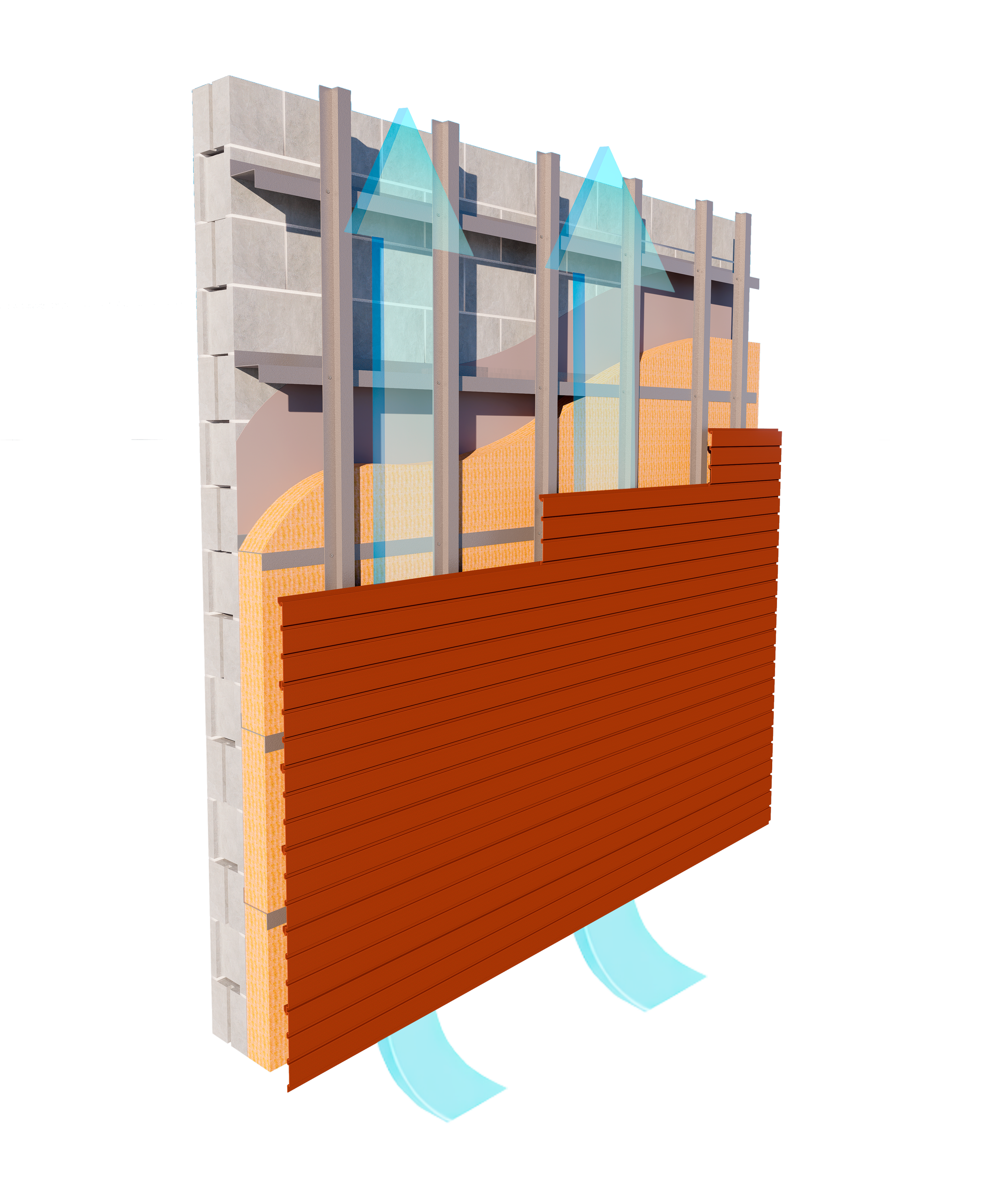
NFPA 285 is a fire-test method for exterior, non-load-bearing wall assemblies containing combustible components. The standard uses a representative multistory wall specimen and evaluates whether fire propagates vertically or laterally across the exterior face, through concealed spaces, or into the story above.
NFPA 285 evaluates the wall assembly as configured. It is not a material label that can be transferred to every wall using the same outer cladding.
This distinction is central to aPlank specifications. Aluminum can reduce combustible content at the exterior layer, but the supporting documentation still needs to represent the relevant wall components and installation conditions.
Why Aluminum Cladding Does Not Decide Compliance by Itself
Solid aluminum is non-combustible, but it remains one layer in a larger exterior-wall system. Combustible insulation, air barriers, water-resistive barriers, thermal isolators, or accessory materials may still bring the assembly within code provisions that reference NFPA 285.
That is why the useful specification question is not, “Is this aluminum panel NFPA 285 compliant?” The better question is, “Does the available NFPA 285 evidence apply to the complete wall configuration proposed for this project?”
Material-level classifications such as ASTM E84 can support a submittal, but they do not replace assembly-level evidence when the adopted code requires NFPA 285.
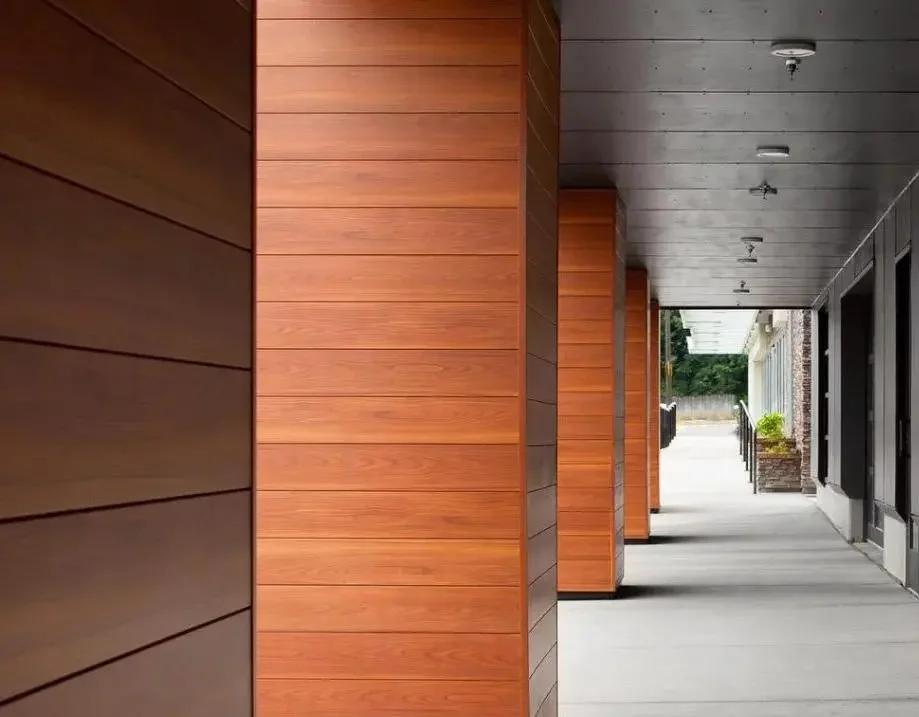
That assembly-level thinking is reflected in a recent Citibank project, where aPlank woodgrain-finish aluminum panels were used at the soffit. The application delivers the visual warmth of wood through a non-combustible aluminum material, while still requiring the complete soffit and exterior-wall build-up to be reviewed as a coordinated assembly.

aPlank woodgrain-finish aluminum soffit panels installed at a Citibank project.
What Parts of the Wall Assembly Matter?
| Assembly component | What to verify |
|---|---|
| Exterior cladding | Material, profile, orientation, thickness, joints, and attachment method. |
| Subframing | Rails, clips, girts, fasteners, cavity depth, spacing, and support conditions. |
| Insulation | Product type, thickness, density, location, and continuity. |
| Air and water layers | Product identity, combustibility, placement, and installation method. |
| Sheathing and backup wall | Sheathing type and thickness, framing, substrate, and interior layers. |
A report that includes a familiar cladding name is not enough. The project team must determine whether the documented configuration meaningfully represents the proposed design, including interfaces that can affect fire spread within the cavity.
The aFrame thermally broken subframing system should therefore be coordinated with the selected cladding and wall layers as part of the complete assembly review, not evaluated as an isolated accessory.

Review aPlank system documentation before specification
Contact the aPlank team to request available fire-performance records, system details, installation guidance, and specification resources.
Contact aPlank Team →What Specifiers Should Request
Before advancing an aluminum cladding system, request enough information to understand the evaluated configuration and its limitations. The package may vary by project, but it should allow the design and code teams to compare the proposed wall with the supporting evidence.
- Applicable NFPA 285 test report, listing, or evaluation documentation
- Drawings identifying the wall components and installation conditions
- Cladding, subframing, fastener, joint, and cavity requirements
- Product names, thicknesses, and material descriptions
- Documented limitations, substitutions, or engineering analyses
Certifications and evaluation reports can help code officials and design professionals relate products and systems to model-code requirements, but they do not eliminate project-specific comparison or approval by the authority having jurisdiction.
Use NFPA 285 Documentation During Specification
NFPA 285 review is most useful before the wall specification is finalized. At that stage, the team can still coordinate cladding, insulation, barriers, subframing, and substrates as one system rather than trying to reconcile incompatible product selections during submittals.
This assembly-level review is one part of the broader aluminum cladding fire, wind, and performance compliance process, where fire documentation must be coordinated with structural testing, project design pressures, and jurisdiction-specific requirements.
Review the Wall, Not Only the Cladding
Non-combustible aluminum cladding can simplify one part of the fire-performance strategy, but NFPA 285 remains an assembly-level test. The most reliable review compares the proposed wall layers, attachments, and installation conditions with the supporting documentation before the specification is locked.
aPlank provides engineered aluminum cladding, battens, subframing, and technical resources that help project teams evaluate the facade as a coordinated system. Confirm final applicability with the project’s qualified code professional and authority having jurisdiction.
NFPA 285 and Aluminum Cladding: Common Questions
Does aluminum cladding automatically comply with NFPA 285?
No. Solid aluminum is non-combustible, but NFPA 285 evaluates the complete exterior wall assembly. Insulation, air and water barriers, subframing, sheathing, attachments, joints, and other components can affect the applicable compliance path.
What should be compared with an NFPA 285 test report?
Compare the proposed cladding, insulation, air and water control layers, sheathing, support wall, cavity depth, attachment method, and installation conditions with the documented assembly. Product names alone are not enough to establish that the project wall matches the tested configuration.
Can ASTM E84 or ASTM E136 replace NFPA 285?
Not by themselves. ASTM E84 and ASTM E136 provide material-level information, while NFPA 285 evaluates fire propagation through and across a complete exterior wall assembly. The adopted code and project conditions determine which evidence is required.
When should NFPA 285 documentation be reviewed?
Review it during specification and system coordination, before the wall build-up is finalized. Early review gives the project team time to align cladding, insulation, barriers, subframing, and substrates without relying on late substitutions or redesign.