Beyond Net-Zero: How Low-Carbon Aluminum Facade Systems Are Redefining Commercial Building Performance
Sustainability · 2026
 Sustainability

The sustainability conversation in U.S. commercial construction has moved well past operational efficiency. Under LEED v5, the new focus is whole-life carbon: the full carbon ledger from raw material extraction through manufacturing, installation, and eventual end-of-life recovery. For architects, developers, and specifiers evaluating extruded aluminum facade panels and rainscreen cladding systems, this shift changes what "sustainable" means at the specification stage. The selection between primary and recycled aluminum is no longer a secondary consideration. It is a primary one, with direct consequences for embodied carbon calculations, ESG reporting, and LEED credit eligibility.

Low-Carbon Facade Systems
Specify a Tested, Documented Assembly
aPlank provides recycled-content extrusion documentation, Environmental Product Declarations, and tested assembly configurations for projects pursuing LEED v5 and ESG compliance targets.
Talk to a specialist →Why Embodied Carbon Now Defines the Sustainable Facade
The Limits of Operational Efficiency
For over a decade, the dominant sustainability metric for commercial buildings was energy use intensity (EUI): how much energy a building consumes each year in operation. That metric drove insulation upgrades, glazing improvements, and HVAC optimization. It did not, however, account for the carbon embedded in building materials before the first occupant ever arrived.
Research by the Architecture 2030 initiative has shown that embodied carbon in building materials accounts for a substantial and growing share of total lifecycle emissions, particularly as grid electricity becomes cleaner. For high-performance commercial buildings targeting net-zero operations, embodied carbon in the envelope can represent 50% or more of the building's total lifetime carbon output. Ignoring it while optimizing operations is a structural gap in any serious carbon strategy.
The Aluminum Variable
Aluminum has an unusual carbon profile. Primary aluminum, produced by smelting bauxite ore through an electrolytic process, is among the most energy-intensive metals to manufacture. Secondary aluminum, produced by remelting recycled scrap, requires approximately 5% of that energy. The embodied carbon difference between a facade system built from primary aluminum and one built from high-recycled-content extrusions is substantial enough to materially affect a project's lifecycle assessment (LCA) results. For specifiers reviewing Environmental Product Declarations (EPDs), the global warming potential (GWP) figure on the datasheet is directly tied to this sourcing decision.
Low-Carbon Aluminum Facade Systems and the Circular Building Model
From Linear to Circular: A Material Strategy Shift
The traditional construction supply chain follows a linear model: extract, manufacture, install, demolish, landfill. For aluminum composite cladding and many other facade materials, that model is effectively irreversible. Composite panels bond dissimilar materials that cannot be cleanly separated for recycling. The result is a cladding system that may last 20 years on a building but contributes to landfill waste at the end of that cycle.
Extruded aluminum operates differently. Aluminum retains its alloy properties through multiple recycling cycles without structural degradation, making it one of the few construction materials genuinely suited to a circular economy model. Panelized rainscreen systems using mechanically fastened aluminum panels can be demounted at end-of-life, segregated by alloy, and returned to the secondary aluminum stream intact. This is not a theoretical future benefit; it is a documentable feature that supports LEED v5 Circularity credit pathways today.
Durability as a Sustainability Metric
Circularity also depends on longevity. A facade system replaced every 15 years consumes more materials over a building's lifecycle than one that performs for 40 or 50 years. In the demanding U.S. commercial market, where buildings face extreme thermal cycling, UV exposure, coastal salt spray, and hurricane-force wind loads, material durability is not a premium feature; it is a prerequisite for any credible sustainability claim.
aPlank extruded aluminum rainscreen systems are engineered for this environment. The extrusion alloys are inherently corrosion-resistant, the panel geometry is designed to manage moisture drainage without relying on sealants, and the AAMA 2605-certified finish options are tested to resist UV degradation, chalking, and color fade over decades of service. That performance durability directly supports the lifecycle argument: a system that remains functional and aesthetically stable for the long term reduces the cumulative embodied carbon burden of the building envelope over its full service life.

Documenting Low-Carbon Performance for LEED v5 and ESG Reporting
What LEED v5 Requires from the Building Envelope
LEED v5, the current certification framework, significantly expands the weight given to embodied carbon and circularity compared to previous versions. The Material Resources credit category now rewards projects that provide EPDs for building products, document recycled content percentages, demonstrate end-of-life planning, and select materials with verifiably lower GWP. For facade systems, this means the datasheet behind the panel matters as much as the panel itself.
Specifiers pursuing LEED v5 need facade system suppliers to provide more than a product brochure. They need third-party verified EPDs, documented recycled content percentages at the billet sourcing level, confirmation of AAMA coating certification, and tested assembly documentation for fire and structural compliance. The more of this documentation that arrives pre-packaged with the system, the lower the submittal risk and the easier the LEED credit path.
Code Compliance Does Not Change with Carbon Content
A common concern among specifiers new to low-carbon aluminum is whether recycled-content extrusions meet the same fire and structural standards as primary aluminum products. The answer is unambiguous: recycled content has no bearing on non-combustibility or structural performance. Aluminum classified as non-combustible under ASTM E136 retains that classification regardless of the sourcing of its billet. NFPA 285 compliance is determined by the full assembly configuration, not the carbon origin of the panel material.
aPlank supplies tested assembly configurations and compliance documentation as part of every system specification. This includes NFPA 285 tested assemblies for mid-rise and high-rise applications, AAMA 2605 coating certification records, and Miami-Dade Notice of Acceptance (NOA) documentation for projects in hurricane exposure zones. The low-carbon position of the system does not require any trade-off against code compliance.
ESG Reporting and Investor Expectations
Beyond LEED, ESG reporting frameworks used by institutional developers and real estate investment trusts increasingly require disclosure of embodied carbon in new construction. The GHG Protocol and emerging SEC climate disclosure guidelines are pushing embodied carbon from voluntary reporting into mandatory territory for many project types. Selecting facade systems with documented low-carbon credentials, complete EPDs, and recycled content supply chain traceability positions developers for compliance with these frameworks before they become mandatory requirements in their markets.
"Pre-engineering facade details is where design intent is either protected or lost, and it is where the sustainability case for low-carbon materials is either documented or ignored."
aPlank Technical TeamThe Complete Facade Assembly: Thermal Performance and System Integration
Thermal Bridging and the Subframing Decision
A low-carbon panel on a thermally inadequate subframing system does not deliver a low-carbon building. Thermal bridging through conventional metal subframing significantly degrades envelope performance, increasing heating and cooling loads and undermining the operational carbon improvements that the sustainability strategy was designed to achieve. The subframing decision is as consequential as the panel material decision.
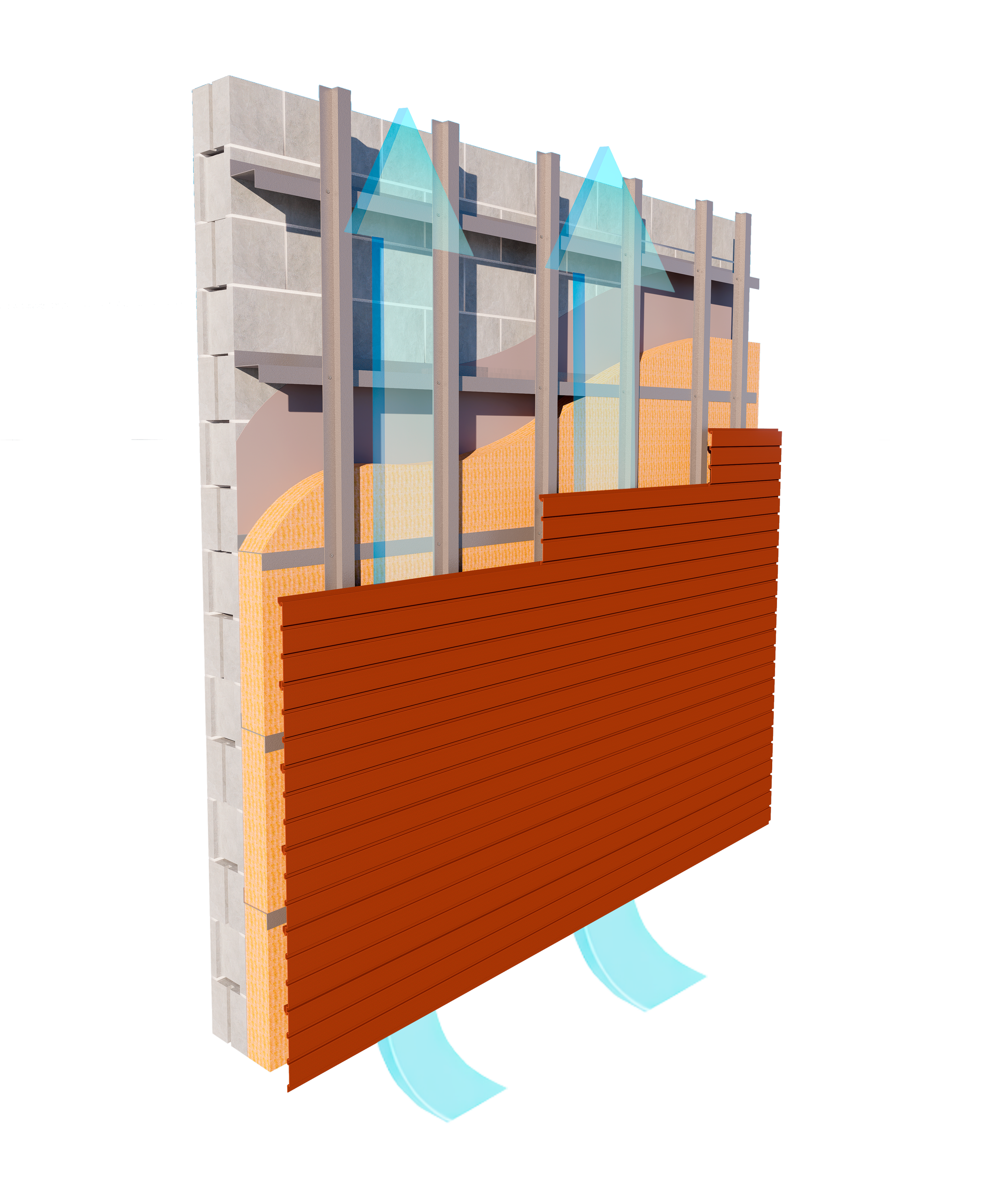
The aFrame thermally broken subframing system addresses this directly. By integrating a thermal break between the outer bracket and the structural wall connection, aFrame minimizes conductive heat transfer through the subframe, supporting the envelope's thermal continuity without requiring labor-intensive site modifications. For projects targeting ASHRAE 90.1 continuous insulation requirements or LEED energy performance credits, the subframing system is part of the carbon and energy story, not separate from it.
The System as a Single Engineered Assembly
The most effective way to specify low-carbon, energy-efficient aluminum facade systems is to treat the wall assembly as a single engineered system: subframing, insulation, air and water barrier, and cladding panel selected and documented together. When each component is specified independently, the compliance and performance documentation becomes fragmented, creating risk at the construction stage and gaps in the LEED submittal record.
aPlank provides system-level documentation that treats the full assembly as one coordinated specification. Panel profiles, subframing configurations, finish specifications, and compliance records are presented together, reducing coordination burden for the project team and ensuring that the sustainability case for the facade is fully documented from a single source.
LEED v5 Credit Pathways for Low-Carbon Aluminum Facade Systems
| Credit Category | Relevant Requirement | aPlank Documentation |
|---|---|---|
| Material Resources: EPDs | Third-party verified Environmental Product Declarations for building products | EPD available with GWP values and recycled content documentation |
| Material Resources: Recycled Content | Post-consumer and pre-consumer recycled content by weight | High-recycled-content billet with documented sourcing |
| Circularity: End-of-Life Planning | Disassembly planning and material recovery pathways | Mechanically fastened panel system; fully demountable; aluminum 100% recyclable |
| Energy Performance: Envelope | Continuous insulation and thermal bridging mitigation per ASHRAE 90.1 | aFrame thermally broken subframing system supports CI compliance |
| Fire Safety: NFPA 285 | Tested wall assembly for fire propagation in mid-rise and high-rise applications | Tested assembly configurations with NFPA 285 documentation included |
Building the Case for Low-Carbon Aluminum from Specification to Certification
The shift toward whole-life carbon accounting is not a distant trend. LEED v5 is current, ESG disclosure requirements are advancing, and institutional owners increasingly require documented embodied carbon data as a condition of project approval. For architects, developers, and specifiers working on commercial, multifamily, institutional, and hospitality projects, the window for treating embodied carbon as a secondary specification factor is closing.
Extruded aluminum facade systems built from high-recycled-content billet, finished to AAMA 2605 standards, and engineered with thermally broken subframing represent a concrete, documentable path toward lower embodied carbon without compromise to fire compliance, structural performance, or design flexibility. aPlank engineers these systems as complete, tested assemblies, providing the EPDs, compliance records, and system documentation that project teams need to close the gap between sustainability intent and certified performance. The technical foundation for specifying low-carbon aluminum is available now. The question is how to integrate it effectively from the early design phase forward.
Low-Carbon Aluminum Facades: Common Questions
What is the carbon footprint difference between primary and recycled aluminum?
Primary aluminum production involves smelting bauxite ore, a highly energy-intensive process. Producing aluminum from recycled content requires approximately 5% of the energy needed for primary smelting, which means embodied carbon is reduced dramatically when high-recycled-content billet is used. For projects undergoing lifecycle assessment or pursuing LEED v5 credits, specifying extruded aluminum systems with documented recycled content is one of the most direct ways to lower a building envelope's embodied carbon.
How do low-carbon aluminum facade systems support LEED v5 compliance?
LEED v5 places stronger emphasis on whole-life carbon than previous versions. Low-carbon aluminum facade systems contribute to several LEED v5 credit pathways, including Material Resources credits for recycled content and Environmental Product Declarations (EPDs), and the new Circularity credits that reward disassembly, material recovery, and end-of-life planning. Systems built from high-recycled-content extruded aluminum and designed with demountable connections offer clear documentation trails for LEED submittals.
Does using recycled aluminum affect NFPA 285 fire compliance?
No. The recycled content percentage of an aluminum extrusion does not affect its non-combustible properties. Aluminum is classified as non-combustible under ASTM E136 regardless of whether it originates from primary or secondary smelting. NFPA 285 compliance is determined by the full assembly configuration, including substrate, insulation, and cladding, tested as a system. Specifiers should confirm that the complete facade assembly, not just the panel, holds NFPA 285 documentation.
What is circularity in the context of facade systems?
Circularity in facade design means selecting materials and assemblies that can be recovered, reprocessed, and reused at the end of a building lifecycle without downcycling or landfill disposal. Extruded aluminum is well suited to this model: it retains alloy integrity through multiple recycling cycles, and panelized rainscreen systems with mechanical fastening can be demounted intact. This contrasts with composite cladding materials that are difficult or impossible to separate into recoverable streams at demolition.
What documentation should specifiers request for low-carbon aluminum facade systems?
Specifiers should request an Environmental Product Declaration (EPD) that documents the global warming potential (GWP) of the aluminum extrusions, including recycled content percentage and manufacturing location. Additional documentation should include AAMA 2605 or AAMA 2604 coating certification, tested assembly configurations for NFPA 285 and applicable wind or impact standards, and any available third-party verification of the recycled billet supply chain.