aFrame Thermally Broken Subframing: System Integration
 Facade Systems

Subframe design is fundamental to rainscreen system performance over the years. It influences structural support, thermal bridging, movement accommodation, and installation tolerances, ultimately affecting the durability and reliability of the entire rainscreen facade system.
aFrame®, aPlank's thermally broken adjustable subframing system, is designed to support the engineering demands of modern rainscreen facades. By reducing thermal bridging, accommodating substrate tolerances, and adapting to multiple cladding materials, it provides the flexibility needed to support constructability, value engineering, and long-term system performance.
Why the Subframe Decision Shapes the Facade
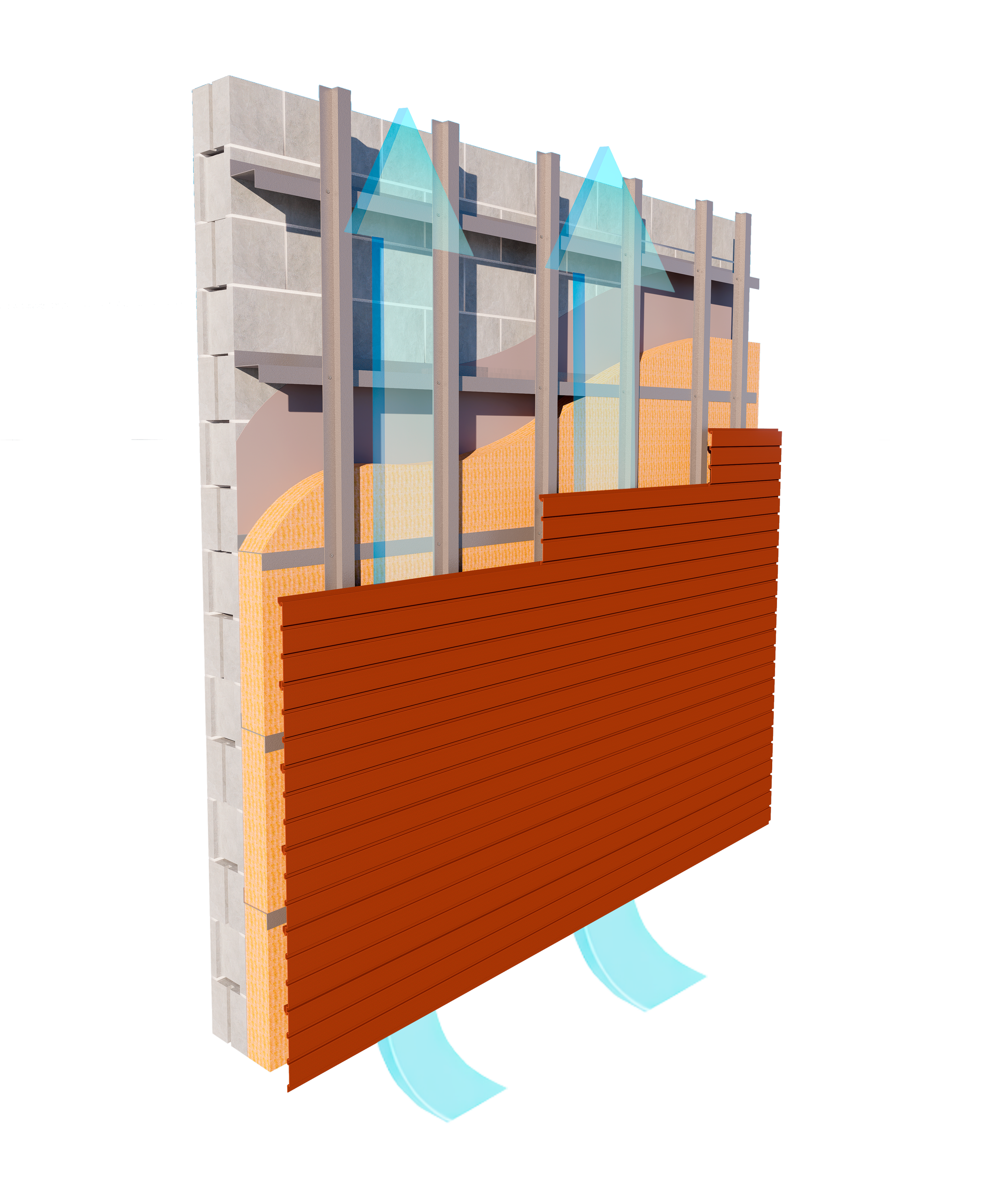
aFrame treats the subframe as connective infrastructure, not standalone hardware. Bracket spacing, thermal break placement, and rail selection are decided together with the cladding panel, the air barrier, and the insulation depth, because a gap in any one of those decisions becomes a gap in the finished wall. That's the systems thinking aPlank brings to every aluminum cladding panel install: the subframe is engineered alongside the panel, not bolted on after the fact.
For teams specifying across multiple panel types on the same building, that coordination compounds. A subframe that locks a project into one cladding material early limits design flexibility later; one engineered for adjustability protects it.

Explore aFrame System Documentation
Bracket specifications, rail configurations, and CSI technical files for thermally broken subframing.
Download specifications →Built-In Tolerance: Fixed Points, Sliding Points, and Expansion Control
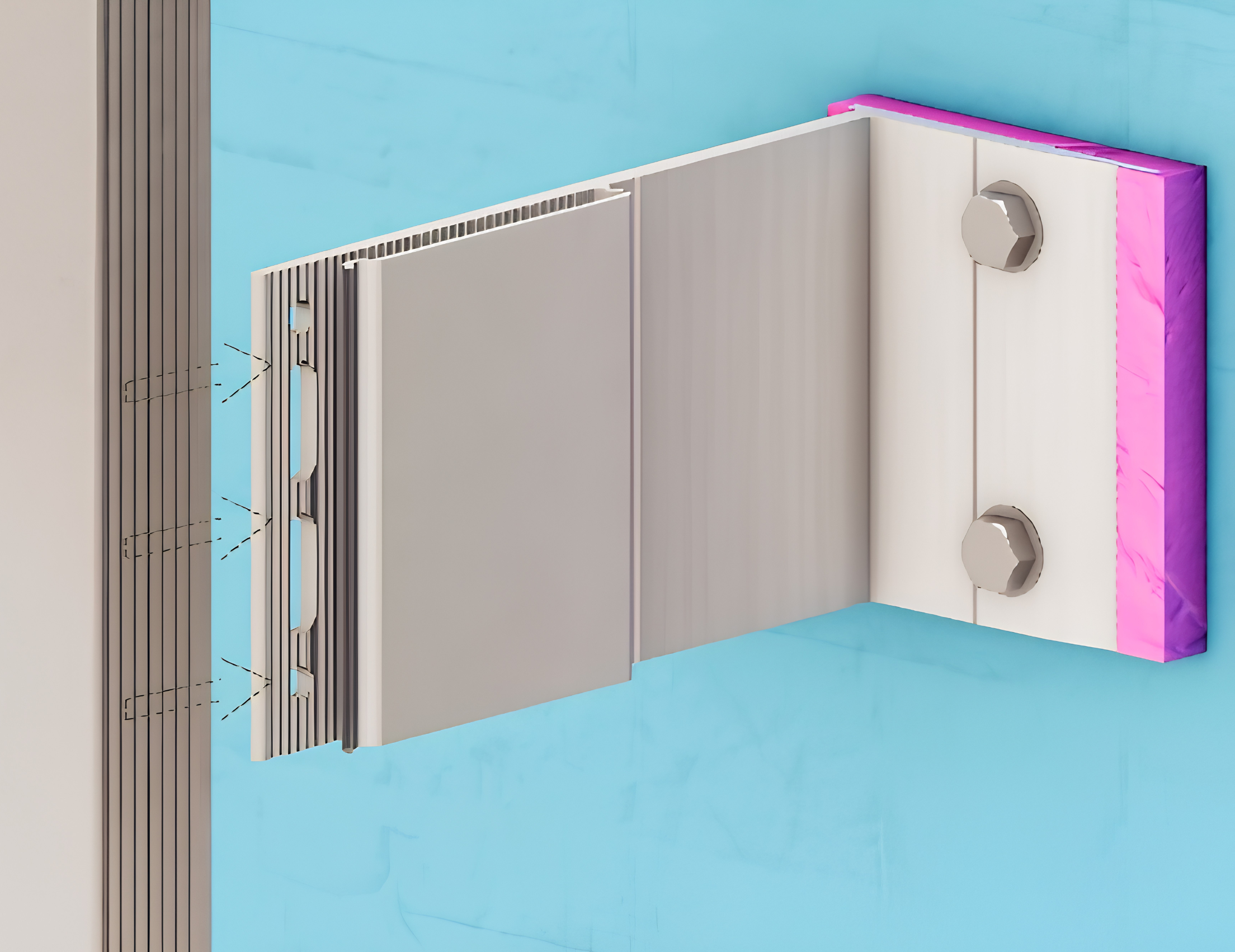
Real walls are never perfectly flat, and real claddings move. aFrame brackets are available in four depths, V4 through V10, covering a 4 inch to 12 inch system range, with standard 3 inch and XL 6 inch lengths for higher wind and cladding loads. Each bracket offers up to 2 inches of adjustability, enough to true up line and level across an uneven substrate without re-engineering the wall.
The rail attachment is built around movement, not just fit. Only one bracket per profile carries a fixed-point fastener, anchored through round holes to absorb dead load. Every subsequent bracket along that rail uses a sliding-point fastener through slotted holes, absorbing dynamic load and thermal expansion. Profile ends are set with a half-inch gap to accommodate that movement, protecting both panel and attachment points from stress that uneven subframes eventually pass through to the cladding.

aFrame brackets in V4, V6, V8, and V10 depths, covering the full 4 inch to 12 inch system range with standard and XL lengths.
One Subframe, Many Claddings
aFrame's primary layer accepts either a T-Rail or L-Rail profile, paired with a secondary J-Rail or Hat-Rail layer when additional cavity depth or panel-specific attachment is needed. That layered rail system is what makes one bracket family usable across rainscreen cladding, extruded aluminum panels, UHPC, ACM, terracotta, and fiber cement.
Adjustable Multi-Material Subframe
- One bracket and rail family across cladding types
- T-Rail/L-Rail primary layer, J-Rail/Hat-Rail secondary layer
- Up to 2" of adjustment per bracket for substrate variance
- Single submittal package holds across panel changes
Panel-Specific Subframing
- Hardware selected per panel type
- Limited adjustability for substrate irregularity
- Often re-specified if cladding material changes
- Separate submittal for each material swap
For a facade with mixed cladding types, or a project where the panel material gets value-engineered late, that flexibility avoids a second subframe specification mid-project. It also means a single submittal package can stay valid even if the architect later swaps from a fiber cement panel to a UHPC or terracotta unit, since the attachment plane behind the wall doesn't change. Full CSI specifications and technical files are available for each rail configuration.
“A subframing system built around the connection, not the cladding material, is designed to perform through specification changes.”
— aPlank Facade Systems TeamInstallation Details That Support Long-Term Performance
Subframe performance depends as much on installation details as it does on material selection. Movement accommodation, corrosion resistance, cavity continuity, and attachment quality all contribute to the long-term reliability of a rainscreen assembly. aFrame is designed to support these principles through its bracket-and-rail system, while the overall performance of the wall assembly still depends on installing the cladding, insulation, air barrier, and other components in accordance with the tested assembly and project documentation.
Match Fasteners to Substrate
Stainless steel fasteners throughout the system help prevent bimetallic corrosion at every bracket-to-rail connection. Primary anchor selection still depends on the wall substrate, with pull-out testing recommended for masonry and brick.
Position Brackets to the Approved Layout
Bracket position, size, and spacing follow the approved shop drawings, helping ensure the installed subframe matches the wall assembly specified for the project.
Maintain Drainage and Ventilation
Insulation is cut tight around each bracket and fastened so it can't migrate into the drainage and ventilation cavity, keeping moisture moving through the cavity rather than collecting around the fasteners and substrate connections.
Verify Before Cladding
Anchor torque, fastener type and position, and line and level are verified across the installed area before cladding begins. These final checks confirm the installed subframe aligns with the approved project documentation.
Specifying aFrame: Defining the Right System
Specifying aFrame begins with defining the project's performance requirements. aPlank uses information such as the cladding material and panel weight, anticipated wind and cladding loads, wall substrate (CMU, steel stud, concrete, or masonry), and the required cavity or insulation depth to determine the appropriate bracket, rail, and attachment configuration. The result is an aFrame configuration tailored to the project's wall assembly while maintaining the same adaptable subframing platform across different cladding systems.

Cladding material, whether aluminum, UHPC, terracotta, or fiber cement, is one of the key inputs aPlank's team uses to size the right aFrame bracket and rail configuration.
aFrame Thermally Broken Subframing: Common Questions
What is the difference between aFrame V4, V6, V8, and V10 brackets?
The V4 through V10 designations refer to the overall system depth supported by the aFrame bracket, ranging from 4–6 inches for V4 to 10–12 inches for V10. Each size is available in a standard 3-inch or XL 6-inch length, with XL versions intended for applications with higher wind and cladding loads. Selection is based on the required system depth and the project's structural loading requirements.
What substrates is aFrame compatible with?
aFrame is designed for installation over a variety of wall substrates, including masonry, CMU, and concrete. The recommended primary anchor varies by substrate, and pull-out testing is recommended for masonry and brick applications. aPlank can provide substrate-specific anchor recommendations based on the project's wall construction.
Does aFrame support heavier cladding materials like UHPC or terracotta?
Yes. aFrame is designed as an adaptable subframing platform compatible with a wide range of rainscreen cladding systems, including UHPC, terracotta, fiber cement, ACM/MCM, and other facade materials. Project-specific structural requirements determine the appropriate bracket size, bracket length, and spacing for the selected cladding system.
How does aFrame prevent corrosion between dissimilar metals?
Stainless steel fasteners are used throughout the aFrame system at every bracket-to-rail and rail-to-panel connection, helping reduce the risk of bimetallic corrosion between dissimilar metals over the service life of the assembly. Primary anchor material is selected separately based on the wall substrate.